Taste of Ayutthaya: A Hidden Food Journey You’ve Never Imagined
Ever wondered what it feels like to taste history? In Ayutthaya, every bite tells a story—street-side woks sizzle with centuries-old recipes, fragrant curries whisper secrets of Thai heritage, and sweet mango sticky rice melts like gold in the sun. I walked its ancient alleys not just to see ruins, but to eat like locals do. This isn’t just dining—it’s time travel on a plate. Beyond the towering temple spires and moss-covered Buddha heads lies a quieter, richer narrative: one written in spice, simmered in coconut milk, and served on banana leaves. For the curious traveler, Ayutthaya offers more than relics of a bygone empire; it invites you to savor the living legacy of a culture where food is memory, identity, and daily devotion.
Why Ayutthaya? More Than Just Temples
Ayutthaya, once the glittering capital of Siam and a major Southeast Asian trading hub, stands today as a UNESCO World Heritage site celebrated for its hauntingly beautiful temple ruins. Tourists flock to see the iconic seated Buddha entwined in banyan roots at Wat Phra Si Sanphet or the serene elegance of Wat Mahathat. Yet, beyond these well-trodden paths lies a different kind of heritage—one that doesn’t require a ticket or a guidebook. It’s found in the smoky haze of roadside grills, the rhythmic pounding of mortar and pestle in open-air kitchens, and the communal joy of eating from shared baskets. While the temples speak of power and piety, the food speaks of people—of farmers, traders, and families who have fed this city for generations.
The culinary soul of Ayutthaya is deeply interwoven with its geography and history. Situated at the confluence of three rivers—the Chao Phraya, Pa Sak, and Lopburi—this ancient city was a natural crossroads for trade, culture, and ingredients. It welcomed merchants from China, India, Persia, and Portugal, each leaving subtle marks on local cuisine. This fusion didn’t happen in royal kitchens alone; it permeated everyday meals, shaping a food culture that is both complex and accessible. Today, the same rivers that once carried royal barges now host floating vendors who glide quietly at dawn, offering steaming bowls of noodle soup to early risers.
Exploring Ayutthaya through food transforms the travel experience from passive observation to active participation. Instead of merely photographing ruins, you engage with living traditions—watching a vendor fold delicate dumplings by hand, learning which chili paste brings warmth without fire, or discovering how tamarind balances sweetness in a curry. These moments create deeper connections, offering insight into the rhythms of local life. The city’s food scene isn’t staged for tourists; it unfolds naturally in markets, alleyways, and family kitchens, making it one of the most authentic culinary destinations in Thailand.
The Soul of Street Food: Where Locals Eat
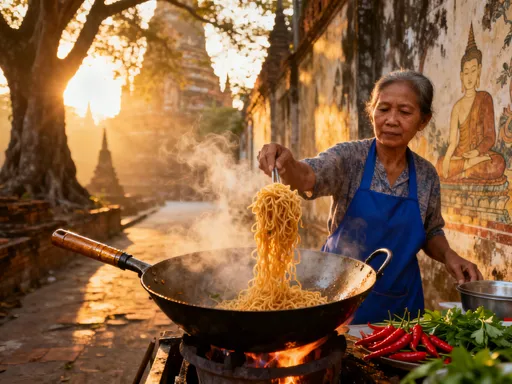
If Ayutthaya has a heartbeat, it pulses in its street food stalls. Here, cuisine is not an art form displayed behind glass but a vibrant, ever-moving celebration of flavor and convenience. The streets come alive at all hours, but especially in the early morning and late afternoon, when workers, students, and elders gather around low plastic tables to share quick, satisfying meals. These aren’t fancy setups—most consist of a single cart, a wok, and a propane flame—but they deliver some of the most memorable tastes in the region.
One of the most beloved dishes is boat noodles, or *kway teow ruea*, a rich, dark broth simmered with pork or beef, star anise, and blood (used to thicken and deepen the flavor). Served in small bowls so you can try multiple portions without overfilling, these noodles were historically sold from longtail boats along the canals. Though fewer vendors now operate from watercraft, the tradition lives on in roadside versions, where the broth retains its intense depth. Another staple is *som tam*, the spicy green papaya salad that combines shredded unripe papaya with tomatoes, green beans, peanuts, and a pungent dressing of lime, fish sauce, and chilies. The dish is pounded fresh in a mortar, releasing a fragrance that draws people in from meters away.
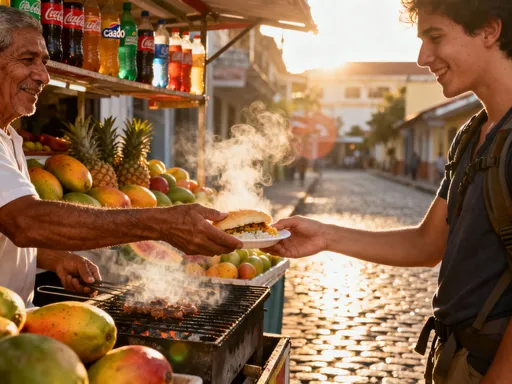
Grilled pork skewers, or *moo ping*, are another street favorite. Marinated in a blend of garlic, coriander root, and soy sauce, the meat is grilled over charcoal until slightly charred and juicy. Served with sticky rice and a side of spicy dipping sauce, they make for a perfect snack or light meal. What sets these dishes apart isn’t just their taste but the way they’re consumed—quickly, communally, and without pretense. Locals often eat standing up, balancing their plates on makeshift counters, or crouching on stools just inches from the road. There’s no separation between the kitchen and the diner; the cooking happens in full view, creating a sense of trust and transparency.
The atmosphere at these stalls is warm and unguarded. Vendors greet regulars by name, children dart between tables with bowls in hand, and laughter mixes with the sizzle of oil. It’s a world away from the sanitized food courts of modern malls. This authenticity is what makes Ayutthaya’s street food so compelling—not because it’s exotic, but because it’s real. It reflects a way of life where food is not just fuel but a daily ritual of connection and comfort.
From Market to Table: A Morning at the Floating Stalls
To understand Ayutthaya’s food culture, one must start at dawn. As the first light spills over the riverbanks, the floating markets begin to stir. These aren’t the tourist-heavy markets found in other parts of Thailand; they are functional, low-key gatherings where local vendors sell fresh produce, prepared dishes, and household goods from small wooden boats. The Chao Phraya River, once the lifeblood of the kingdom, still serves as a vital artery for commerce and community.
Imagine standing on a wooden pier, the air cool and damp, as a vendor in a wide-brimmed hat glides toward you in a narrow boat piled high with baskets of mangoes, bananas, and rambutans. From another, steam rises from a covered pot—she’s selling *jok*, a comforting rice porridge topped with minced pork, sliced ginger, and a soft-boiled egg. Nearby, a man in a striped shirt fries *khanom buang*, crispy Thai crepes filled with sweet or savory toppings, the sound of batter hitting hot oil echoing across the water. The scent of lemongrass, kaffir lime, and chili fills the air, mingling with the earthy smell of wet wood and river mud.
What makes these floating stalls remarkable is their immediacy. Everything is made or harvested that morning. A woman cracks open coconuts with a machete, pouring the milk into a pot to make curry. Another vendor boils rice noodles just minutes before serving, ensuring freshness and texture. There are no freezers, no pre-packaged meals—just food prepared with care and sold directly to those who need it. Prices remain remarkably low, reflecting the local economy rather than tourist demand. A bowl of noodles might cost less than a dollar, and a bundle of fresh herbs just a few cents.
These markets are not spectacles; they are essential parts of daily life. Housewives paddle out in small boats to do their shopping. Elderly men buy breakfast before heading to the temple. Schoolchildren grab a quick snack on their way to class. For visitors willing to rise early and observe quietly, the experience is deeply rewarding. It offers a rare glimpse into a way of life that has changed little in decades. To eat here is to participate in a tradition that values simplicity, seasonality, and community—a reminder that food, at its best, is both nourishment and ritual.
Hidden Eateries Only Locals Know
Ayutthaya’s most memorable meals are rarely found in guidebooks. They happen in places with no signs, no websites, and often no names. These are the family-run shophouses tucked behind quiet temples, the roadside noodle joints wedged between a repair shop and a flower stall, the unmarked doorways where a grandmother stirs a pot of curry in the back room. They don’t advertise because they don’t need to—their reputation travels by word of mouth, sustained by generations of loyal customers.
One such place might be a simple wooden structure near a canal, with plastic chairs and a single ceiling fan turning slowly overhead. The menu isn’t written down; instead, the owner recites the day’s offerings, which change depending on what’s fresh at the market. Today, it might be *gaeng liang*, a light vegetable soup with shrimp paste and morning glory, or *pad kana*, stir-fried Chinese kale with garlic and oyster sauce. The food is served on mismatched plates, and water comes in reused glass bottles. Yet, the flavors are exceptional—balanced, clean, and deeply satisfying.
Another hidden gem could be a stall behind a temple complex, where a retired schoolteacher now spends her mornings making *khanom jeen*, thin fermented rice noodles served with a rotating selection of curries. One day it’s a green curry with fish, another it’s a peanut-based sauce with shredded chicken. She uses recipes passed down from her mother, adjusting the spice levels based on who’s eating. When asked why she never expanded, she smiles and says, “This is enough. I cook for my neighbors. I don’t need more.”
Finding these places requires more than a map—it demands curiosity, patience, and a willingness to wander without a destination. It means saying yes to an invitation from a vendor who notices you lingering, or following a local family to their favorite spot. It means accepting that not every meal will be perfect, but that imperfection is part of the experience. These hidden eateries aren’t just about food; they’re about hospitality, pride, and the quiet dignity of home cooking. They remind us that the best meals are often the ones we don’t plan for.
Royal Flavors: Tracing Ayutthaya’s Culinary Roots
The flavors of Ayutthaya are not accidental—they are the result of centuries of cultural exchange, royal patronage, and agricultural innovation. As the capital of Siam from 1351 to 1767, Ayutthaya was a cosmopolitan center where diplomacy, trade, and cuisine flourished. Foreign envoys brought new ingredients and techniques, which were adapted and refined in local kitchens. The royal court, in particular, played a key role in elevating Thai cuisine to an art form, blending native traditions with influences from neighboring regions.
One of the most enduring legacies of this era is the development of complex curries that balance sweet, sour, salty, and spicy notes. Dishes like *massaman curry*—a rich, mildly spicy stew with beef, potatoes, and roasted spices—are believed to have Persian or Muslim Indian origins, introduced through trade and adapted to local tastes. The use of cinnamon, cardamom, and star anise reflects Ayutthaya’s historical connections with the Indian Ocean trade network. Similarly, *roti*, a flaky flatbread often served with sweet condensed milk or savory curries, shows the influence of Muslim traders from South Asia, though it has since become a beloved street snack across Thailand.
Chinese influence is also deeply embedded in Ayutthaya’s food. The city had a large Chinese merchant community, and their culinary traditions merged with Thai flavors to create dishes like *ba mii*, egg noodles served with pork or chicken in a clear broth, and *khanom chin jeen*, rice noodles with a variety of sauces. Stir-frying techniques, wok hei (the breath of the wok), and the use of soy sauce and fermented black beans all point to this enduring connection. Even something as simple as a steamed dumpling can carry layers of history, revealing how migration and trade shaped everyday meals.
What’s remarkable is how these royal and foreign influences filtered down into common cuisine. Unlike in some cultures where elite food remains separate from popular fare, in Ayutthaya, the flavors of the palace became the flavors of the people. Today, a street vendor’s curry contains the same careful balance of spices once perfected in royal kitchens. This democratization of flavor is a testament to the city’s culinary philosophy: that good food should be accessible, not exclusive. Every bite carries a trace of history, not as a museum piece, but as a living, evolving tradition.
How to Eat Like a Local: Practical Food Travel Tips
For travelers eager to explore Ayutthaya’s food scene authentically, a few practical tips can make all the difference. First, look for busy stalls. A crowd of locals is the best indicator of quality and freshness. If a vendor has a line of motorbike riders or office workers waiting, it’s almost certainly worth trying. Cleanliness matters, but don’t equate it with Western standards—many of the best places are simple setups with open-air kitchens. As long as the food is cooked fresh and served hot, the risk is minimal.
Learning a few basic Thai phrases can enhance the experience. Simple greetings like “Sawasdee” (hello) and “Aroi mak” (very delicious) go a long way in building rapport. When ordering, pointing is perfectly acceptable, but trying to say the name of a dish—like “kway teow” for noodles or “mango sticky rice”—shows respect and curiosity. Cash is still king in most markets, so carry small bills and coins. Most street food items cost between 20 and 60 baht, so having change ready makes transactions smoother.
Dining etiquette in Ayutthaya is relaxed but meaningful. It’s common to share dishes family-style, even among strangers at communal tables. Wait for the eldest person to start eating, and avoid sticking your chopsticks upright in a bowl of rice, as this resembles incense at a funeral. When in doubt, observe what others are doing—Thais are generally patient with tourists who make small mistakes. The key is to eat mindfully, savoring each bite rather than rushing through a meal.
Don’t be afraid of spice, but don’t assume you have to endure it. Many dishes can be adjusted—ask for “mai pet” (not spicy) if needed. Also, don’t overlook vegetarian options; many markets offer tofu-based dishes, stir-fried vegetables, and fresh fruit. Finally, ask vendors for recommendations. A simple “What do you eat?” or “What’s fresh today?” often leads to the best meals. These interactions aren’t just about food—they’re about human connection, the kind that turns a visit into a memory.
Beyond the Plate: Why Food Makes the Journey
In the end, what stays with us from a trip is rarely the checklist of sights we’ve seen, but the moments we’ve tasted. A photograph of a temple can fade, but the memory of eating mango sticky rice under a banyan tree, the juice dripping down your fingers, remains vivid for years. Food has a unique power to anchor us in a place, to connect us to its people, and to awaken senses that sightseeing alone cannot reach.
In Ayutthaya, every meal is an act of cultural preservation. When you eat a bowl of boat noodles, you’re tasting a recipe shaped by river life. When you bite into a roti folded by a street vendor, you’re experiencing centuries of trade and adaptation. These flavors are not static; they evolve with each cook, each season, each conversation. Yet, they remain rooted in a shared history, a collective memory passed down through generations.
Traveling through food invites a slower, more thoughtful way of exploring. It requires listening, observing, and participating. It means sitting longer, asking questions, and accepting invitations. It transforms the traveler from an outsider to a guest, welcomed not for what they spend, but for their willingness to engage. In a world where destinations often feel commercialized or homogenized, Ayutthaya’s food scene offers something rare: authenticity, warmth, and continuity.
So the next time you plan a journey, let your stomach guide you. Step away from the guidebook, wander down unmarked alleys, and follow the scent of chili and coconut milk. Let the locals lead you to their favorite spots, and eat with gratitude and curiosity. Because the truest way to know a place is not by seeing it, but by savoring it—one unforgettable bite at a time.