Through the Lens of Peace: Hidden Corners of Kabul That Breathe Life
Kabul, often seen through the shadow of history, reveals a different story when viewed through a photographer’s eye—one of quiet resilience, daily rhythm, and unexpected beauty. In this journey, we explore serene parks, sunlit courtyards, and quiet alleys where life unfolds gently. These are spaces where locals unwind, children play, and moments of calm are captured not just on camera, but in the soul. Beyond the headlines and historical weight, Kabul holds pockets of peace—places where laughter echoes between ancient walls and sunlight filters through plane trees like whispered promises of normalcy. This is not a tale of conflict, but of continuity, of life persisting with grace and dignity.
Reframing Kabul: A Photographer’s Perspective
For decades, international media has framed Kabul through the lens of war, instability, and political upheaval. While these realities have shaped the city’s modern history, they do not define the entirety of its present. A growing number of visual storytellers are choosing to shift the narrative—not by ignoring challenges, but by balancing them with images of everyday life, resilience, and cultural continuity. Through photography, the city’s quieter truths come into focus: a woman adjusting her scarf in the morning light, boys racing homemade wooden carts down a cobbled lane, or an old man sipping tea beneath a grapevine-covered trellis. These moments, though ordinary, carry profound significance.
Photography, at its most powerful, becomes an act of rehumanization. When travelers and documentarians focus solely on destruction or danger, they risk reducing a complex society to a single, incomplete story. By contrast, images that capture daily routines, shared meals, and communal spaces restore agency and individuality to the people of Kabul. The act of photographing a child flying a kite in a sun-dappled park is not mere escapism—it is a recognition of joy as an essential human experience, even in places often associated with hardship.
This shift in perspective requires intentionality. Photographers must move beyond the instinct to capture the dramatic or the tragic and instead cultivate patience, empathy, and respect. It means waiting for the right light, earning trust before raising a camera, and understanding that every frame carries ethical weight. In Kabul, where surveillance and suspicion have long been part of life, this approach is not just courteous—it is necessary. Ethical photography in such contexts means prioritizing dignity over exposure, authenticity over spectacle.
Moreover, this reframing benefits not only the subjects but also the viewers. Images of peaceful, vibrant life in Kabul challenge assumptions held by audiences worldwide. They invite a deeper understanding—one that acknowledges struggle without erasing strength. For the traveler with a camera, this means embracing the role of witness rather than voyeur, and recognizing that the most powerful photographs are often the quietest ones.
The Green Heart of the City: Parks as Sanctuaries
Amid the bustling streets and layered history of Kabul, green spaces serve as vital oases of calm and connection. Among these, Bagh-e Babur—also known as the Gardens of Babur—stands as a symbol of endurance and renewal. Originally laid out in the early 16th century by the Mughal emperor Babur, who found solace in Kabul’s climate and terrain, the garden has undergone extensive restoration in recent years. Today, it is not a relic frozen in time, but a living, breathing space where families gather, friends stroll, and elders sit in quiet contemplation beneath centuries-old cypress trees.
The garden’s terraced design, flowing water channels, and symmetrical pathways reflect classic Persian garden principles, where nature is harmonized with geometry and spiritual reflection. In spring, almond and cherry blossoms paint the upper terraces in soft pinks and whites, drawing visitors who spread out on carpets for picnics and poetry readings. By summer, the shade of mature plane trees offers relief from the heat, while fountains and irrigation channels create a soothing soundtrack of flowing water—a rare auditory luxury in an otherwise noisy city.
Bagh-e Babur is more than a tourist destination; it is a communal sanctuary. On weekends, it fills with families enjoying leisure time together—mothers watching children chase pigeons, couples sitting side by side in quiet conversation, groups of young men playing football on the lower lawns. The atmosphere is one of gentle ease, a space where the rhythms of daily life unfold without urgency. For photographers, this makes it an ideal location to capture authentic human moments in a naturally composed setting.
Light plays a crucial role in photographing the gardens. Early morning offers the softest illumination, with long shadows stretching across stone pathways and mist rising from the central waterway. Late afternoon, especially during golden hour, bathes the whitewashed mausoleum and surrounding foliage in warm, honeyed tones. A polarizing filter can help manage glare on water surfaces, while a mid-range aperture (f/5.6 to f/8) ensures both foreground subjects and background architecture remain in focus. However, technical choices should never override respect for privacy—always ask before photographing individuals, especially women and children.
Other green spaces, such as the smaller parks scattered throughout residential neighborhoods like Wazir Akbar Khan and Shahr-e Naw, also offer moments of serenity. These local parks may lack the historical grandeur of Bagh-e Babur, but they are equally important as everyday retreats. Here, elderly men play chess under canvas umbrellas, toddlers take their first steps on paved paths, and teenagers read books beneath flowering trees. These spaces, though modest, reflect a deep cultural value placed on outdoor life and communal well-being.
Courtyards and Teahouses: Intimate Spaces of Leisure
Beyond the public parks, some of Kabul’s most meaningful moments of leisure unfold in private and semi-private spaces—traditional courtyards and neighborhood teahouses. These settings, often tucked behind unassuming doors or nestled within narrow alleyways, offer a glimpse into the slower, more intimate rhythms of Afghan domestic life. Unlike the formality of public institutions, these spaces thrive on informality, warmth, and generational continuity.
Courtyard homes, a hallmark of traditional Afghan architecture, are designed around an open central space that allows light and air to circulate while maintaining privacy from the outside world. In older neighborhoods, it is common to see families gathered in these inner spaces during cooler hours of the day—grandparents sipping green tea, women preparing meals on portable stoves, children playing simple games with pebbles or marbles. The walls, often painted in faded ochre or white wash, bear the marks of time: chipped plaster, handprints, and climbing vines that sway in the breeze.
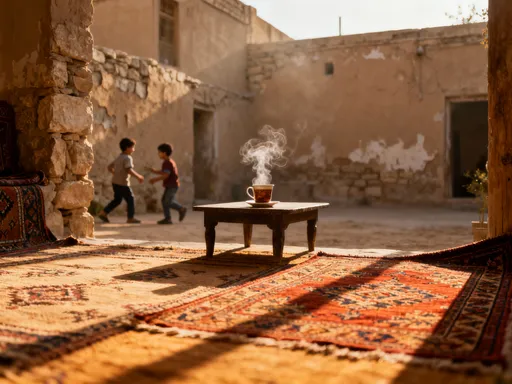
For the observant visitor, these courtyards are rich with visual texture. Sunlight filters through wooden latticework, casting intricate patterns on the ground. Steam rises from teacups placed on low wooden tables, and handwoven rugs in deep reds and blues add bursts of color against earth-toned surroundings. The sounds are equally evocative—laughter, the clink of porcelain, the distant call to prayer—layered into a quiet symphony of daily life. Photographing these scenes requires sensitivity; many families may welcome a respectful observer, but only after introductions and permission are granted.
Teahouses, known locally as *chai khana*, serve a similar social function. Found in both bustling bazaars and quiet side streets, these modest establishments are gathering places for men of all ages. Inside, the air is thick with the scent of cardamom tea and baked bread. Low wooden stools surround small tables, where patrons sip tea, nibble on flatbread, and engage in conversation that ranges from politics to poetry. Some teahouses feature hookah pipes, though their use has declined in recent years due to health awareness.
What makes these spaces compelling for photography is not their grandeur, but their authenticity. The worn wooden beams, the steam-fogged windows, the creased faces of elderly men lost in thought—all speak to a culture of pause and presence. A wide-angle lens can capture the cramped yet cozy interiors, while a 50mm prime lens is ideal for portraits that maintain natural perspective. The key is to avoid sensationalism; these are not exotic scenes to be exploited, but ordinary moments of human connection worthy of quiet observation.
Street Corners with Soul: Capturing Everyday Rhythms
While parks and courtyards offer structured leisure, some of the most spontaneous and heartfelt moments in Kabul occur on its streets and alleyways. These are not the chaotic thoroughfares of traffic and commerce, but the quieter edges of residential life—narrow lanes where laundry flutters between buildings, where boys kick footballs made of plastic bags, and where kites dance above rooftops on breezy afternoons. It is in these unscripted scenes that the city’s spirit feels most alive.
One of the most enduring traditions in Kabul is kite flying, especially during the spring festival of Nowruz and the weeks that follow. In neighborhoods like Karte Char and Karte Seh, children gather on flat rooftops, their hands gripping spools of twine as they guide colorful kites through the wind. The sight of dozens of kites swirling against the backdrop of the Hindu Kush mountains is both playful and poetic—a metaphor for freedom, aspiration, and resilience. Photographing these moments requires anticipation and timing; a telephoto lens (70–200mm) allows for candid shots without intrusion, while a fast shutter speed freezes the motion of the kites against the sky.
Equally compelling are the quieter street scenes: an elderly woman selling fresh herbs from a cloth laid on the pavement, a tailor working at a foot-powered sewing machine in an open-front shop, or a group of schoolgirls in blue uniforms walking home in pairs, their laughter echoing off stone walls. These images, when captured with care, become visual records of cultural continuity. They show a city where tradition and modernity coexist, where life is lived with resourcefulness and grace.
Respectful street photography in Kabul demands a mindful approach. Unlike in some Western cities, where candid shots are often tolerated, photographing individuals—especially women—without permission can be seen as intrusive or even offensive. A simple nod, a smile, or a gesture of greeting can go a long way. When possible, engage in brief conversation before raising the camera. Many people, once they understand the intent, are happy to be photographed, especially if shown the image afterward on the camera’s display.
Timing also plays a role. Early mornings and late afternoons are ideal, not only for light but for activity. Mornings bring street vendors setting up their stalls, children heading to school, and shopkeepers sweeping their doorsteps. Late afternoons offer the return home, family reunions, and the soft glow of sunset illuminating adobe walls. A photographer who moves slowly, observes patiently, and interacts kindly is more likely to witness—and capture—genuine moments of connection.
Light and Shadow: Mastering Kabul’s Unique Visual Texture
Kabul’s physical environment contributes significantly to its photographic character. Nestled in a narrow valley surrounded by the rugged Hindu Kush mountains, the city experiences dramatic shifts in light and atmosphere throughout the day. Its high altitude—approximately 1,800 meters above sea level—means sunlight is intense, with deep contrasts between illuminated surfaces and shadowed recesses. This creates a dynamic visual landscape, rich with opportunities for compelling imagery.
Golden hour, the period shortly after sunrise and before sunset, is particularly transformative. During these times, the sun skims the mountain peaks, casting long, soft rays across the city. Facades that appear harsh and dusty in midday light take on a warm, golden glow. Dust particles suspended in the air catch the light, creating a subtle haze that adds depth and mood to photographs. This ethereal quality is especially effective in portraits and street scenes, where it softens features and enhances emotional tone.
Midday light, by contrast, can be challenging. The sun is high and direct, producing harsh shadows and blown-out highlights. For photographers, this often means seeking shade, using diffusers, or focusing on architectural details where strong contrast enhances texture—such as weathered doors, carved wooden balconies, or the geometric patterns of brickwork. A lens hood is essential to minimize lens flare, and shooting in RAW format allows for greater flexibility in post-processing to recover lost details in shadows and highlights.
Weather also influences the city’s visual texture. Kabul has a semi-arid climate with distinct seasons. Spring brings mild temperatures and blooming trees, making it one of the most photogenic times of year. Summer is hot and dry, with clear skies that amplify the blue tones in photographs. Autumn offers crisp air and golden foliage, while winter transforms the landscape with snow-capped mountains and a quiet, monochromatic palette in the city itself. Each season presents unique opportunities for storytelling through light and color.
The city’s dust-laden air, while sometimes seen as a nuisance, can actually benefit photography by diffusing light and reducing contrast. On hazy days, distant mountain ranges appear softer, almost dreamlike, creating a sense of depth and atmosphere. A polarizing filter can help manage reflections on glass or metal surfaces, while a UV filter may protect lenses from fine particulate matter. Ultimately, embracing the environment—rather than fighting it—allows photographers to capture Kabul as it truly appears and feels.
Ethics in Focus: Photographing People with Dignity
In any travel photography context, but especially in places like Kabul, ethical considerations are paramount. The act of pointing a camera at someone is not neutral—it carries power, perception, and potential for harm if done without care. The goal should never be to extract images, but to engage with people as equals, honoring their autonomy and humanity.
Consent is the cornerstone of ethical photography. Whenever possible, ask for permission before photographing individuals, particularly in private or semi-private spaces. A simple gesture—holding the camera at waist level and nodding—can communicate intent. In many cases, people will either smile and gesture approval or shake their head politely. Respecting a “no” is non-negotiable. Even if a moment seems perfect, capturing it without consent risks violating trust and reinforcing colonial or exploitative dynamics.
When photographing children, extra caution is required. Always seek permission from a parent or guardian. Avoid images that could be interpreted as portraying poverty or vulnerability in a sensational way. Instead, focus on expressions of joy, curiosity, or concentration—universal emotions that affirm dignity rather than diminish it. If sharing images online, avoid geotagging specific locations that could inadvertently expose individuals to risk.
Another ethical consideration is representation. Too often, images of Afghanistan have emphasized war, poverty, or traditional dress in ways that flatten cultural complexity. Photographers have a responsibility to challenge these stereotypes by showing a fuller spectrum of life—modern clothing, technology use, professional work, and leisure activities. A woman in a headscarf using a smartphone, a young man reading a novel in a park, or a family dining at a modern restaurant are all valid and important representations of contemporary Kabul.
Building trust takes time. Spending hours in a single location, engaging in small talk, and showing genuine interest in people’s lives often leads to more meaningful interactions—and better photographs. Some of the most powerful images come not from quick snapshots, but from relationships formed over time. When people feel seen and respected, their expressions become more open, more authentic. The camera, in this context, becomes a bridge rather than a barrier.
Why These Moments Matter: The Power of Seeing Anew
The photographs we choose to take—and share—shape the way the world sees a place. In the case of Kabul, shifting the visual narrative from one of conflict to one of continuity is not just an artistic choice; it is a moral one. Every image of a child laughing, a family picnicking in a garden, or an elder sipping tea in silence contributes to a more balanced, humane understanding of life in this resilient city.
These moments matter because they affirm what is often overlooked: that normalcy persists, that joy is possible, and that culture endures even in the face of adversity. They remind us that people everywhere share the same fundamental needs—to rest, to connect, to find beauty in the everyday. For travelers and photographers, this means adopting a mindset of visual empathy: seeing not with the eye of a tourist, but with the heart of a witness.
Documenting peaceful life in Kabul is not about ignoring challenges or pretending difficulties do not exist. It is about refusing to let those challenges define an entire people. It is about recognizing that dignity is not something to be bestowed, but something already present—in the way a woman arranges her scarf, in the way a boy kicks a ball, in the way sunlight falls across a courtyard at dawn.
To those who carry cameras into cities like Kabul, the invitation is clear: look deeper. Slow down. Listen before you shoot. Seek not the extraordinary, but the ordinary—the quiet, enduring rhythms of life that speak louder than headlines ever could. In doing so, we do not just capture images; we honor lives. And in honoring lives, we help the world see anew.