You Won’t Believe What This Hidden Town in Laos Keeps Secret
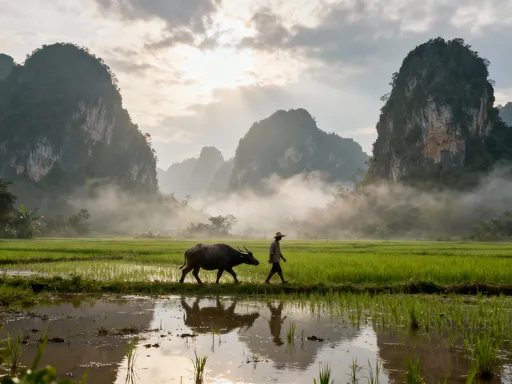
Tucked between limestone cliffs and emerald rivers, Vang Vieng in Laos is more than just a backpacker pit stop. I went expecting tubing and hostels, but found something deeper — a living culture woven into the landscape. From sacred caves to rice fields shaped by generations, nature here isn’t just scenery. It’s part of daily life. What makes Vang Vieng truly special isn’t just its jaw-dropping beauty, but how people live *with* it, not against it.
Reimagining Vang Vieng: Beyond the Party Reputation
For many travelers in the early 2000s, Vang Vieng was synonymous with nonstop river tubing, cheap beer, and all-night parties along the banks of the Nam Song River. Backpackers flocked here for carefree adventure, floating downstream on inflatable tubes while music blared from makeshift river bars. But beneath the surface of this party culture, a quieter, more enduring truth remained — one rooted in centuries-old traditions, spiritual reverence, and a deep connection to the land. In recent years, Vang Vieng has undergone a remarkable transformation, turning away from its reputation as a hedonistic escape and embracing a more thoughtful, community-centered model of tourism.
This shift did not happen overnight. As tourism boomed, so did its consequences. Litter piled up along riverbanks, water quality declined, and local customs were often overlooked or misunderstood by visitors. The town’s natural beauty, once its greatest asset, began to suffer. Recognizing the long-term risks, local leaders, supported by national policies and international conservation partners, began redefining what tourism could mean for Vang Vieng. New regulations restricted reckless river activities, closed down polluting businesses, and encouraged eco-conscious alternatives. The message was clear: Vang Vieng would no longer be a place where nature was taken for granted.
Today, the town offers a different kind of adventure — one that invites curiosity, respect, and connection. Travelers still come to kayak, cycle, and explore, but many now do so with a greater awareness of their impact. Homestays, guided cultural walks, and community-led tours have replaced some of the rowdier attractions, allowing visitors to engage meaningfully with the people and places around them. The energy has shifted from consumption to participation, and in that shift, Vang Vieng has rediscovered its soul.
The Karst Landscape as Cultural Canvas
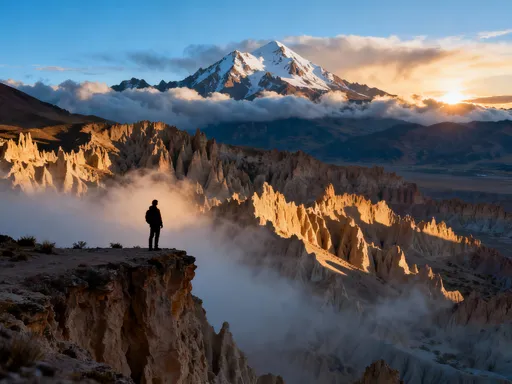
Rising like ancient sentinels from the valley floor, the limestone karsts of Vang Vieng are more than just a breathtaking geological formation — they are a living part of the cultural and spiritual identity of the region. These towering formations, shaped over millions of years by wind and water, are deeply embedded in local belief systems. Many are considered sacred, housing caves that have served as meditation sites, places of worship, and even ancestral burial grounds for generations. To the people who live here, the karsts are not just scenery; they are guardians of memory and meaning.
Local stories speak of spirits dwelling within the cliffs, of gods who shaped the land during creation, and of ancestors whose presence lingers in hidden grottos. One elder from a nearby village shared a tale of a great serpent said to have coiled itself into the mountains during a time of flood, its body becoming the very rock that now shelters bats and monks alike. While these stories may not be literal truth to outsiders, they reflect a worldview in which nature is animate, purposeful, and worthy of reverence. This perspective shapes how people interact with the landscape — not as conquerors, but as stewards.
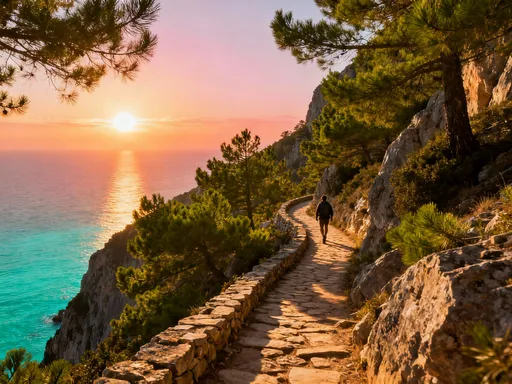
Hiking through these hills is not merely a physical activity; it is often an act of cultural respect. Many trails lead to caves that are still used for Buddhist retreats, where monks and villagers go to pray, meditate, and make offerings. Visitors are welcome in some areas, but always under specific conditions — removing shoes, speaking softly, and refraining from flash photography. These rules are not signs of exclusion, but of care. They ensure that the sanctity of these spaces is preserved, not turned into photo opportunities. In this way, the karsts teach a quiet lesson: that awe should lead to humility, not entitlement.
Rivers That Sustain Body and Spirit
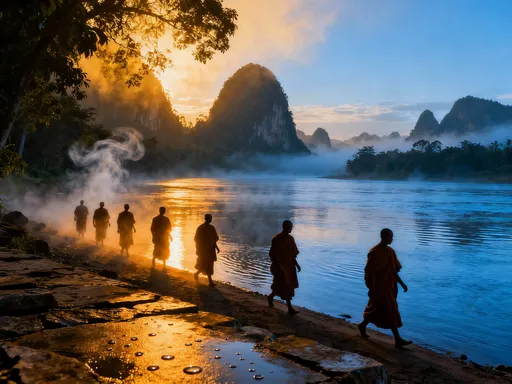
The Nam Song River is the lifeblood of Vang Vieng, flowing through the heart of the town and shaping nearly every aspect of daily existence. For local families, the river is far more than a place to swim or float — it is a source of food, a site of ritual, and a rhythm-keeper for the agricultural calendar. Traditional fishing methods, such as woven bamboo traps and hand nets, are still practiced by older villagers, passed down through generations. Children learn to swim in its shallows, while elders gather along its banks in the evenings, sharing stories as the sun dips behind the karsts.
Seasonal changes in the river’s flow dictate the timing of planting and harvesting, linking water levels to food security. During the dry season, when the current slows and pools form beneath overhanging trees, communities hold small ceremonies to give thanks for the river’s bounty. Offerings of rice, flowers, and incense are placed at its edge, a gesture of gratitude that underscores the belief that nature provides only when respected. These quiet rituals, often unseen by tourists, are vital threads in the fabric of local life.
Yet, the river has not always been treated with such care. In the height of the tubing era, pollution became a serious issue. Plastic waste, fuel runoff from motorized boats, and human waste from unregulated guesthouses degraded water quality and harmed aquatic life. Fish populations declined, and swimming became risky. Recognizing the danger, a coalition of local residents, environmental groups, and government agencies launched a comprehensive river restoration initiative. This included banning single-use plastics, relocating riverside toilets, and launching community clean-up campaigns. Educational programs taught both locals and visitors about sustainable practices, emphasizing that the health of the river is inseparable from the health of the community.
Today, the Nam Song is healing. Water clarity has improved, fish are returning, and families once again feel safe using the river for daily needs. The revival of the river mirrors a broader cultural resurgence — a return to values of balance, reciprocity, and long-term thinking. It is a powerful reminder that environmental recovery is not just about technology or policy, but about changing how people see their relationship with nature.
Village Life Meets Natural Rhythms
Beyond the main road that runs through Vang Vieng, narrow dirt paths lead to small farming villages where life unfolds in harmony with the seasons. Here, time is measured not by clocks, but by the sun, the rain, and the growth of rice. The agricultural cycle governs everything — from when children return from school to help in the fields, to when festivals are held to mark the end of harvest. This deep attunement to natural rhythms is not romanticized; it is practical, necessary, and deeply ingrained in daily life.
Rice farming remains the cornerstone of village economies. Families begin planting in early summer, when the monsoon rains soften the earth. Paddy fields, carved into the hillsides like natural terraces, are flooded and carefully seeded by hand. The work is labor-intensive, requiring coordination, patience, and knowledge passed down through generations. Women often lead the planting, bending over in unison as they place each young shoot into the mud, while men maintain irrigation channels and repair bunds. It is a communal effort, one that strengthens social bonds as much as it feeds families.
Visitors who participate in homestays or community-based tourism programs are often invited to join these activities. There is no performance, no staged demonstration — just real work, real people, and real connection. A traveler might rise at dawn to help carry seedlings, or spend an afternoon learning to weave rice baskets from bamboo strips. These experiences offer a rare window into a way of life that values patience, cooperation, and humility. More importantly, they allow visitors to contribute, even in small ways, to the rhythm of village life.
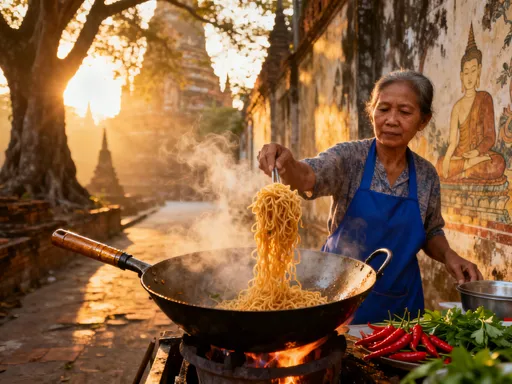
Evenings in these communities are often filled with music and storytelling. Traditional Lao instruments, such as the khaen (a bamboo mouth organ), accompany songs that recount myths, celebrate the harvest, or honor ancestors. These gatherings are not for tourists — but when outsiders are welcomed, it is a sign of trust. To sit in a circle under a thatched roof, listening to songs sung in a language you do not understand, yet feeling their emotion, is to experience a form of communication deeper than words. It is here, in these quiet moments, that the true richness of Vang Vieng reveals itself.
Sacred Caves and Hidden Shrines
Scattered throughout the karst hills are hundreds of caves, many of which remain unknown to mainstream tourism. Some are small, accessible only by climbing narrow ledges; others stretch deep into the mountain, their chambers illuminated only by candlelight. Among these, a select few hold special significance — they are not geological curiosities, but living spiritual spaces. Inside, you might find rows of Buddha statues, offerings of flowers and candles, and the faint scent of incense lingering in the cool air. These are not museums or attractions; they are active sites of worship, visited regularly by monks and villagers alike.
Access to these sacred caves is not guaranteed. Unlike commercialized tourist sites with ticket booths and guided tours, entry is often determined by local custom and permission. Some caves are open only during specific festivals, while others require a request made through a village elder. There are no signs, no brochures — just an understanding that certain places are not meant for everyone. This system of informal stewardship has protected these sites from overuse and commodification, preserving their integrity in a way that fences and regulations alone could not.
When visitors are allowed inside, the experience is marked by silence and reverence. Photography is discouraged, not out of secrecy, but out of respect. The focus is not on capturing an image, but on being present. One traveler recalled kneeling in a dimly lit chamber, watching an elderly woman place a lotus blossom at the feet of a centuries-old Buddha image. There was no explanation, no translation — just the quiet dignity of ritual. In that moment, it became clear that some things cannot be packaged or sold; they can only be witnessed with humility.
These sacred spaces offer a powerful model for sustainable cultural tourism — one based not on control, but on trust. They remind us that authenticity is not something to be performed, but something to be protected. And they challenge the modern traveler to reconsider what it means to visit a place: Is it to collect experiences, or to honor them?
From Exploitation to Balance: Tourism’s Turnaround
The story of Vang Vieng’s recovery is not just about environmental restoration — it is a story of community resilience, cultural pride, and collective decision-making. In the 2000s, the rapid growth of tourism brought short-term economic gains, but at a high cost. The natural environment suffered, traditional values were eroded, and local well-being was compromised. Accidents on the river, noise pollution, and cultural disrespect became common. Many residents watched helplessly as their town was transformed into a destination defined by outsiders’ expectations.
The turning point came when local leaders, supported by national agencies and non-governmental organizations, decided to take back control. A series of policy changes were introduced: reckless tubing was banned, riverside construction was regulated, and waste management systems were improved. At the same time, efforts were made to educate tourists about local customs, with signage, guided orientations, and community ambassadors helping to bridge cultural gaps. These measures were not imposed from above, but developed in collaboration with villagers, ensuring that solutions were both practical and culturally appropriate.
Equally important was the revival of cultural pride. Young people, once drawn to urban lifestyles or foreign influences, began to re-engage with traditional crafts, music, and farming practices. Schools started incorporating local history and environmental education into their curricula. Artisans began selling handmade textiles, baskets, and carvings directly to visitors, bypassing exploitative middlemen. This cultural reawakening was not a rejection of modernity, but a reassertion of identity — a declaration that progress does not require abandoning one’s roots.
The results have been transformative. Today, Vang Vieng attracts a different kind of traveler — one who values authenticity, sustainability, and connection. Eco-lodges, organic farms, and community-run tours have become central to the tourism economy. The town has not rejected tourism; it has redefined it. In doing so, it has shown that destinations can evolve without losing their soul — that growth and preservation are not opposites, but partners.
Traveling with Meaning: A New Way Forward
Vang Vieng offers a powerful lesson for the future of travel: that the most meaningful journeys are not those that take the most, but those that give back the most. The town’s transformation shows that tourism does not have to be extractive — it can be reciprocal. When travelers approach a destination with curiosity, respect, and a willingness to listen, they become part of a shared story, not just observers of it. The real magic of Vang Vieng lies not in its postcard-perfect landscapes, but in the way it invites us to see nature and culture as inseparable, as co-creators of a way of life.
For those planning to visit, there are practical ways to travel with meaning. Choose tours led by local guides who share their knowledge with pride, not performance. Stay in homestays or community-run accommodations that directly support families. Purchase handicrafts from village artisans, asking about the stories behind the patterns and materials. When visiting sacred sites, follow local customs — remove your shoes, speak softly, and ask permission before entering. These small acts of respect build trust and deepen connection.
Equally important is the mindset with which one travels. Instead of rushing from one attraction to the next, consider slowing down. Spend a full day in one village. Share a meal with a host family. Learn a few words of the local language. These moments of presence — unphotographed, unshared on social media — are often the most transformative. They remind us that travel is not about collecting destinations, but about expanding understanding.
Vang Vieng’s journey from party town to cultural sanctuary is not complete, nor is it without challenges. Balancing economic needs with environmental protection, welcoming visitors without compromising traditions, and empowering youth without losing elders’ wisdom — these are ongoing conversations. But the direction is clear. The town has chosen a path of balance, one that honors both its past and its future.
As the world rethinks how and why we travel, Vang Vieng stands as a quiet example of what is possible. It reminds us that the most beautiful places are not just those we see, but those we learn from. That the true value of a journey lies not in what we take home, but in what we carry forward — a deeper respect for the land, for its people, and for the delicate harmony between them. In a world searching for more meaningful ways to connect, Vang Vieng whispers a simple truth: the best travel changes not just your view of the world, but your place within it.