You Won’t Believe How Stunning Brasília’s Hidden Landscapes Are
Brasília isn’t just Brazil’s capital—it’s a visual masterpiece hiding in plain sight. I went expecting concrete and government buildings, but found something totally unexpected: surreal architecture, mirrored lakes, and golden sunsets that look photoshopped (but aren’t). If you're chasing spots that scream “I was here” without the crowds, this city delivers. Trust me—your feed needs these views. Let’s dive into where to go, when to shoot, and how to capture Brasília like a pro.
Why Brasília is a Photographer’s Secret Playground
Brasília stands as one of the most ambitious urban planning projects of the 20th century, and its legacy lives on in every sweeping curve and bold line etched across the landscape. Designed by urban planner Lúcio Costa and architect Oscar Niemeyer, the city was inaugurated in 1960 to serve as Brazil’s new capital, strategically placed in the country’s interior. Unlike the organic growth of older cities, Brasília was born from a blueprint—its layout famously resembling an airplane or bird in flight when viewed from above. This intentional design, recognized by UNESCO as a World Heritage Site in 1987, provides photographers with an unparalleled canvas of symmetry, repetition, and modernist elegance.
What makes Brasília truly exceptional for visual storytelling is how its architecture interacts with light and space. The wide avenues, open plazas, and low-rise structures create natural frames and long sightlines, ideal for capturing depth and perspective. The use of reinforced concrete, a signature of Niemeyer’s style, results in flowing, organic forms that contrast beautifully with the rigid geometry of the city’s grid. Curved government buildings rise like sculptural waves against the sky, while reflective surfaces amplify the changing moods of the day. Unlike the dense, chaotic energy of Rio de Janeiro or São Paulo, Brasília offers breathing room—literally and visually—making it easier to compose clean, powerful images without visual clutter.
For travelers accustomed to Brazil’s tropical beaches and lush rainforests, Brasília presents a different kind of beauty—one rooted in human vision and engineered harmony. The city’s location on the central plateau means a distinct dry season from May to September, offering consistently clear skies and strong, directional sunlight perfect for architectural photography. During the rainy season, from October to April, dramatic cloudscapes roll in, adding emotional weight to compositions. The interplay between the built environment and the surrounding Cerrado biome—the vast tropical savanna unique to central Brazil—creates a dialogue between nature and design that few cities in the world can match. This contrast is not accidental; it was part of the original vision to place a modern city within an untamed landscape, making Brasília not just a political center but a living experiment in urban aesthetics.
The Heartbeat of the City: Praça dos Três Poderes
At the symbolic core of Brasília lies the Praça dos Três Poderes, a monumental plaza where the three branches of Brazil’s federal government converge: the Executive, Legislative, and Judicial. This is more than a political landmark—it is a stage for architectural drama, where form and function merge into a single, powerful statement. The Presidential Palace (Palácio do Planalto), with its sleek columns and open arches, faces the National Congress, whose twin towers rise like sentinels flanked by a dome and an inverted dome. Opposite them stands the Supreme Federal Court, its neoclassical-inspired façade grounding the plaza in solemn dignity. The space between them is vast, paved in light stone, and often dotted with visitors moving like small figures in a grand composition.
What elevates this site for photography is the way light transforms the plaza throughout the day. At midday, the sun casts sharp shadows, emphasizing the geometric precision of the buildings. But it is during golden hour—roughly one hour after sunrise and before sunset—that the Praça truly comes alive. The warm, low-angle light bathes the white concrete in a golden glow, softening edges and creating long, dramatic silhouettes. The reflective pools that flank the Congress building mirror the sky and structures, doubling the visual impact and offering symmetrical compositions that feel almost surreal. For photographers, positioning is key: a low angle near the pools can capture both the reflection and the sky, while a higher vantage point from the observation deck of the Congress allows for sweeping panoramic shots.
Drone photography is permitted in certain zones around the plaza, though operators must follow strict regulations set by Brazil’s National Civil Aviation Agency (ANAC). Flying near government buildings requires special authorization, so it’s best to focus on ground-level or handheld aerial shots from approved viewpoints. Early mornings are ideal for avoiding crowds and capturing the plaza in near solitude. The changing light also affects the mood of the space—on overcast days, the architecture takes on a more somber, monolithic quality, while clear skies enhance contrast and vibrancy. Whether you're using a wide-angle lens to capture the full scope or a telephoto to isolate architectural details, the Praça dos Três Poderes offers endless opportunities to explore scale, symmetry, and the interplay between power and design.
Cathedral of Brasília: Where Light Becomes Art
Rising from the city’s skyline like a crown of concrete, the Cathedral of Brasília is one of Oscar Niemeyer’s most poetic creations. Its hyperboloid structure—composed of 16 curved concrete columns that narrow at the base and flare outward at the top—evokes hands clasped in prayer, a fitting metaphor for a house of worship. But it is inside where the true magic unfolds. The stained glass ceiling, designed by artist Marianne Peretti, floods the interior with a cascade of blue, green, and purple light that shifts with the sun’s position. This is not just a building; it is a vessel for light, transforming the space into a living canvas of color and shadow.
Photographing the cathedral requires an understanding of how light moves through the space. The best time to visit is between 9 a.m. and 11 a.m., when the sun is high enough to illuminate the stained glass but not so direct that it creates harsh glare. During this window, the colored light pools on the white marble floor and reflects off the suspended bronze angels, creating ethereal patterns that change by the minute. A tripod is recommended for interior shots, especially if you're using slower shutter speeds to capture the full depth of the light. A wide-angle lens will help convey the cathedral’s soaring height, while a 50mm prime lens can isolate intimate details like the texture of the concrete or the delicate forms of the angels.
The exterior is equally compelling, particularly at sunrise or sunset when the golden light accentuates the curves of the columns. A low-angle shot from the reflecting pool in front of the cathedral creates a mirror effect, doubling the structure and enhancing its sculptural quality. Visitors are welcome to explore the site daily, though modest dress is encouraged out of respect for its religious function. The cathedral is not a museum—it is a working place of worship, so photographers should be mindful of ongoing services and avoid disruptive behavior. By approaching the space with both technical precision and quiet reverence, you can capture images that honor both its architectural brilliance and spiritual significance.
Juscelino Kubitschek Bridge at Dusk: A Mirror to the Sky
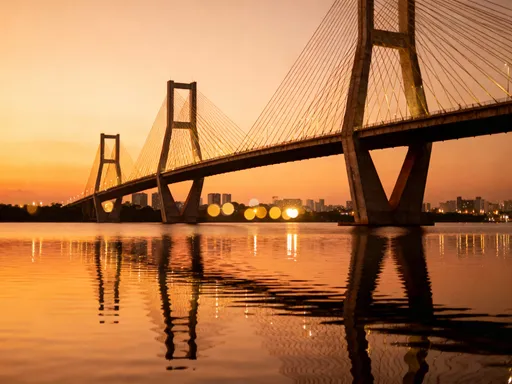
Spanning the calm waters of Lake Paranoá, the Juscelino Kubitschek Bridge—commonly known as the JK Bridge—is a modern engineering marvel and one of Brasília’s most photogenic landmarks. Designed by architect Alexandre Chan and completed in 2002, the cable-stayed bridge features three sweeping arches that rise asymmetrically from the lakebed, supporting the roadway with a network of steel cables. At dusk, when the city lights begin to flicker on and the sky transitions from gold to deep indigo, the bridge becomes a mirror image in the still water below, creating a near-perfect reflection that feels almost otherworldly.
The optimal time to photograph the JK Bridge is during twilight, specifically the 20 to 30 minutes after sunset when the ambient light in the sky balances with the artificial glow of the bridge’s LED lighting system. This brief window, often referred to as “blue hour,” produces a soft, even illumination that enhances contrast without blowing out highlights. A tripod is essential for long-exposure shots, allowing you to capture the smooth flow of traffic as light trails and the crisp reflection in the lake. A shutter speed of 10 to 30 seconds works well, depending on wind conditions—if the water is disturbed, the reflection will blur, so calm evenings are ideal.
There are several safe roadside pull-offs along Eixo Monumental and Via L2 Sul that offer unobstructed views of the bridge. The southern end, near the Yacht Club, provides a slightly elevated vantage point and is less crowded than the northern side. Weather plays a crucial role: after a rainy day, the air is clearer, and the humidity can enhance the diffusion of light, but strong winds will ripple the lake’s surface and ruin the mirror effect. Cloud cover can also add drama to the sky, creating a moody backdrop for the illuminated structure. For those with drone permits, an aerial perspective reveals the bridge’s elegant curve against the expanse of the lake, but even from the ground, the JK Bridge offers a powerful reminder of how modern infrastructure can become art when framed by light and water.
Botanical Garden & Ecological Reserve: Wild Beauty in the Urban Frame
Just minutes from the city’s political and architectural landmarks lies a different Brasília—one defined by native flora, winding trails, and the quiet rustle of wildlife. The Brasília Botanical Garden and its surrounding Ecological Reserve protect over 300 hectares of Cerrado, one of the most biodiverse savannas in the world and a critically endangered ecosystem. Here, the rigid lines of urban planning give way to the organic chaos of nature: twisted trees with gnarled bark, fields of wildflowers, and clusters of bromeliads clinging to rocks. This protected area is home to more than 500 species of native plants, including rare orchids, medicinal herbs, and towering ipê trees that burst into yellow or pink blossoms during the dry season.
For photographers, the Botanical Garden offers a rich contrast to the city’s concrete and steel. Early mornings are the most rewarding time to visit, when mist hovers over the trails and dew glistens on leaves, creating a soft, diffused light ideal for macro and landscape photography. A macro lens can reveal the intricate details of a spiderweb stretched between blades of grass or the delicate veins of a bromeliad leaf. Wide-angle shots capture the sweeping vistas of the savanna, especially when framed with a lone tree or rock formation in the foreground. Birdwatchers and nature photographers may spot toucans, parrots, and even the elusive maned wolf, though sightings require patience and quiet movement.
The reserve also plays a vital role in environmental education and conservation. Trails are well-marked and maintained, with informational panels explaining the importance of the Cerrado and the threats it faces from deforestation and urban expansion. Visitors are encouraged to stay on designated paths, avoid littering, and refrain from picking plants or disturbing wildlife. By respecting these guidelines, photographers not only protect the environment but also ensure that future visitors can experience the same unspoiled beauty. The Botanical Garden reminds us that Brasília is not just a city of ideas and power—it is also a place where nature and urban life coexist in delicate balance.
How to Move, Stay, and Shoot Like a Local
Navigating Brasília as a photographer means balancing access, comfort, and authenticity. The city is large and spread out, with key attractions often separated by wide avenues and roundabouts, so transportation is essential. While public buses connect major sectors, renting a car offers the most flexibility, especially for early morning or late evening shoots when transit is limited. Ride-sharing apps like Uber operate reliably and are a safe, convenient option for shorter trips. For those staying longer, several camera and drone rental shops in the Asa Norte and Asa Sul neighborhoods provide high-quality gear, including tripods, filters, and backup batteries.
When choosing accommodations, proximity to Lake Paranoá or the Monumental Axis can significantly enhance your shooting opportunities. Hotels in the Lago Sul or Lago Norte areas offer easy access to the JK Bridge and waterfront views, while stays in Asa Sul place you within walking distance of cafes, markets, and street life—ideal for candid urban photography. Many guesthouses and boutique hotels cater to professionals and creatives, offering quiet spaces, fast internet, and even rooftop terraces with city views. Always check for secure storage options if carrying expensive equipment.
Safety in Brasília is generally good in tourist and diplomatic zones, but it’s wise to remain aware of your surroundings, especially at night. Avoid displaying valuables openly and keep gear in a discreet bag when moving between locations. When photographing in public spaces, Brazilians are typically friendly and curious, but it’s courteous to ask permission before taking close-up portraits. Government buildings and military installations are off-limits for photography, so always observe posted signs. By blending preparation with respect for local norms, you can move through the city with confidence and focus on capturing its many layers.
Putting It All Together: Crafting Your Brasília Visual Story
A truly compelling travel narrative doesn’t just document places—it weaves them into a cohesive story. In Brasília, that story is one of vision, balance, and the dialogue between human creation and natural beauty. To craft a powerful visual journey, begin by mixing scales: pair wide architectural shots with intimate details like the texture of concrete, the reflection in a puddle, or the shadow of a railing. Capture the rhythm of the city—its symmetry, repetition, and clean lines—while also seeking moments of contrast: a bird in flight over the Congress dome, a flower growing through a crack in the pavement, or a local vendor’s cart beside a modernist monument.
Editing should honor the city’s aesthetic. A slightly high-contrast style with crisp whites and deep blacks can enhance the boldness of the architecture, while preserving the soft pastels of sunrise or the rich golds of sunset. Avoid over-saturating colors, especially in images of the Cathedral’s stained glass, where natural vibrancy is already striking. Black-and-white conversions work exceptionally well for geometric compositions and shadow play, emphasizing form over color. Sequencing your images to move from grand exteriors to quiet interiors, from urban centers to natural reserves, helps guide the viewer through the city’s many moods.
Ultimately, Brasília invites us to see beyond its role as a political capital. It is a city built on ideals—of progress, harmony, and beauty—and every photograph taken there becomes part of that legacy. Whether you’re drawn to its sweeping plazas, its reflective waters, or its wild savanna edges, Brasília offers a rare opportunity to capture a place where design and nature, order and spontaneity, coexist in unexpected harmony. So pack your gear, time your light, and let the city reveal itself—one frame at a time.