This Is What Happens When Mountains Meet Rivers — A Photographer’s Dream in Luang Prabang
You know that feeling when nature just wows you? That’s Luang Prabang. Nestled where jungle-covered karsts rise from winding rivers, this place isn’t just scenic—it’s cinematic. As a photographer, I’ve chased light and landscape across continents, but nothing prepared me for the quiet drama of northern Laos. Mist curls off the Mekong at dawn, limestone cliffs glow in golden hour, and every turn reveals a new frame. If you’re hunting for raw, untouched beauty, you gotta see this.
First Light Over the Mekong: Capturing the Soul of Luang Prabang
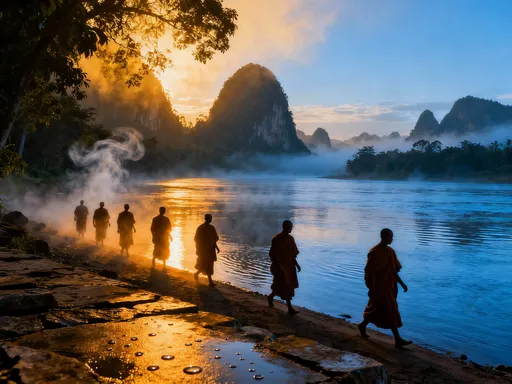
There’s a stillness in Luang Prabang at daybreak that feels almost sacred. Along the banks of the Mekong River, the world moves in hushed tones. Monks in saffron robes walk silently in procession, receiving alms from residents in a centuries-old ritual known as Tak Bat. The soft glow of early light filters through the trees, casting long shadows across cobblestone paths and illuminating the gentle steam rising from morning offerings. For photographers, this is not just a cultural moment—it’s a masterclass in natural lighting and emotional depth. The low angle of the sun enhances texture: the weave of woven bamboo baskets, the grain of weathered wooden houses, the ripple of the river’s surface. Contrast is subtle yet rich, perfect for capturing both detail and atmosphere without harsh highlights or blown-out shadows.
Timing is everything. Arriving before 5:30 a.m. ensures you’re positioned respectfully and quietly, allowing time to compose your shots without disrupting the ceremony. Use a wide aperture (f/2.8 to f/5.6) to isolate subjects while maintaining environmental context, and keep ISO low (100–400) to preserve image clarity. A 24–70mm lens offers versatility, letting you switch between wide environmental shots and tighter portraits. While tripods may be restricted in crowded areas, a monopod or stabilized lens can help in low light. Most importantly, approach with humility. This is not a performance for tourists. Keep your distance, avoid flash, and never block the monks’ path. When done respectfully, your images won’t just document a scene—they’ll carry its quiet dignity.
One of the most powerful aspects of photographing this ritual is the interplay between movement and stillness. The monks walk with measured pace, their robes flowing like brushstrokes against the muted backdrop of dawn. Meanwhile, the onlookers—often locals, not tourists—stand in quiet reverence. Capturing that contrast requires patience and anticipation. Watch for gestures: a hand extended in offering, a bowed head, the fold of fabric catching the breeze. These micro-moments tell stories no wide-angle vista can. And as the first rays of sun strike the river, turning it into molten gold, you realize you’re not just photographing a place—you’re bearing witness to a rhythm of life that has endured for generations.
Karst Kingdom: The Geological Marvels Shaping the Landscape
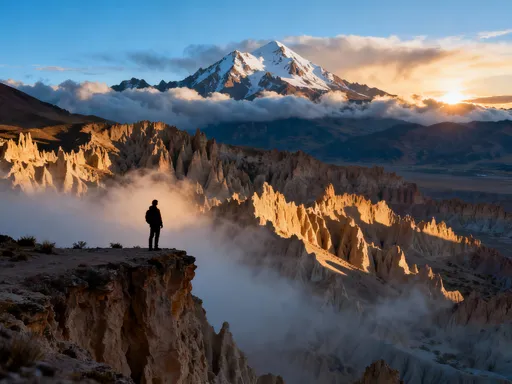
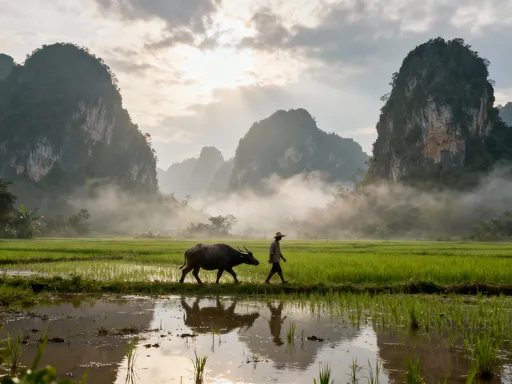
Rising like ancient sentinels from the jungle floor, the limestone karsts around Luang Prabang are more than just dramatic backdrops—they are the very bones of the region’s beauty. Formed over millions of years by the slow dissolution of soluble rock, these jagged formations create a landscape that feels both primal and surreal. Rivers carve through them, forests cling to their slopes, and caves whisper with the echoes of water and time. From a photographic standpoint, they offer unparalleled depth and dimension. Their layered silhouettes provide natural leading lines, while their textures—pitted, striated, moss-draped—add tactile richness to every frame.
What makes these karsts so compelling is their verticality. Unlike flat plains or rolling hills, they demand upward composition, drawing the eye from river level to skyward peaks. This creates a natural sense of scale, especially when juxtaposed with human elements—a boat on the Nam Khan River, a village nestled at the base, a temple perched on a ridge. The interplay between solid rock and flowing water becomes a visual metaphor for resilience and grace. During golden hour, when the sun skims the horizon, the karsts ignite in warm hues, their edges glowing as if lit from within. This is the time to use side lighting to emphasize contours, or backlight to create dramatic silhouettes against a pastel sky.
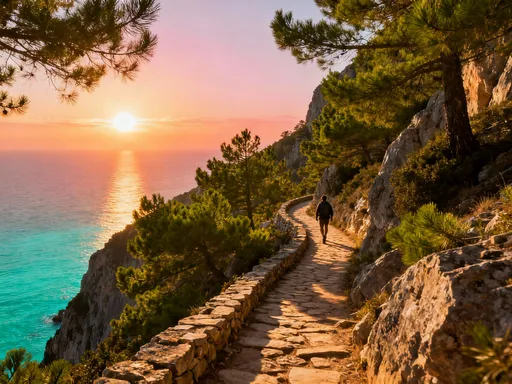
Fortunately, you don’t need to be an expert climber to experience these formations. Several short, well-maintained trails lead to viewpoints that offer panoramic vistas without technical difficulty. One popular route winds through dense foliage to a clearing where the Mekong and Nam Khan rivers converge, framed by towering cliffs on either side. Another follows a gentle ascent to a cave temple, where sunlight filters through natural openings, illuminating centuries-old Buddha statues. These locations provide not only stunning compositions but also moments of quiet reflection. Always stay on marked paths, avoid touching rock surfaces or cave walls, and carry out all waste. These sites are fragile, both geologically and culturally, and preservation begins with mindful visitation.
Hidden Valleys and Secret Gorges: Off-the-Beaten-Path Frames
Beyond the well-trodden streets of Luang Prabang’s UNESCO-listed old town lies a network of hidden valleys and narrow gorges that feel like nature’s best-kept secrets. These are places where the jungle closes in, rivers carve deep into the earth, and waterfalls cascade into emerald pools untouched by crowds. For photographers seeking originality, these locations offer compositions that feel intimate and undiscovered. A single vine dangling over a stream can become a natural frame; a rock arch spanning a tributary creates a portal to another world. The sense of discovery is palpable—and so is the photographic potential.
One such area lies a short boat ride up the Nam Ou River, where limestone walls narrow into a canyon barely wide enough for a longtail boat. Sunlight struggles to reach the water, casting dappled patterns that shift with the current. Here, long exposures (1–2 seconds) can smooth the flow into silk, contrasting with the rough texture of the surrounding cliffs. Another hidden gem is a series of tiered waterfalls fed by seasonal streams, accessible via a moderate hike through secondary forest. The pools below are clear and cool, reflecting the canopy above in near-perfect symmetry. These spots are rarely photographed, not because they’re inaccessible, but because they require local knowledge to find and navigate safely.
This is where hiring a local guide becomes not just helpful, but essential. Guides from nearby villages know the safest routes, seasonal water levels, and cultural sensitivities. They can also advise on the best times to visit—early morning for soft light, late afternoon for golden reflections. More importantly, they ensure you don’t inadvertently trespass on protected land or disturb wildlife. Photography in these areas should never come at the cost of the environment. Use a polarizing filter to cut glare and enhance colors, but avoid disturbing rocks or plants to get a better angle. The most powerful images are those that honor the place as it is, not as we wish to reshape it for a shot.
The Dance of Light and Water: Reflections That Tell Stories
In Luang Prabang, water is never just a backdrop—it’s a co-author of every photograph. Whether it’s the broad expanse of the Mekong, the winding curves of the Nam Khan, or the still pools of a mountain stream, water here has the power to transform reality into art. During the wet season, flooded rice paddies become vast mirrors, reflecting the sky and surrounding hills in flawless symmetry. At dawn and dusk, when the air is calm, rivers turn into liquid glass, doubling the landscape in a way that feels almost dreamlike. These reflective surfaces aren’t just visually striking—they invite introspection, turning a simple composition into a meditation on balance and duality.
To capture these moments, timing and technique are key. Calm conditions are essential, so aim for early morning before winds pick up or late evening when the heat of the day has faded. A tripod is non-negotiable for sharp reflections; even the slightest camera movement can blur the mirror effect. Use a narrow aperture (f/8 to f/16) to maximize depth of field, ensuring both foreground and reflection are in focus. A remote shutter or two-second timer eliminates vibration. Consider using a graduated neutral density filter to balance exposure between bright skies and darker landforms, preserving detail in both.
Seasonal changes dramatically affect these opportunities. During the dry season (November to April), water levels drop, exposing sandbars and riverbanks, which can add interesting textures but reduce mirror-like surfaces. The wet season (May to October) brings fuller rivers and more reflective paddies, though increased cloud cover can soften light. Yet even on overcast days, the diffused illumination can enhance colors and eliminate harsh contrasts, making it ideal for forest interiors or waterfall shots. The key is adaptability—let the conditions guide your creativity rather than resist them. A rainy morning might seem disappointing, but it can yield images of glistening leaves, misty horizons, and water-soaked stone that carry a mood no sunny day can replicate.
From Temple Roofs to Jungle Canopies: Vertical Contrast in Composition
One of the most compelling visual themes in Luang Prabang is the dialogue between the built and the natural—between golden temple spires reaching skyward and the towering trunks of rainforest trees that have done the same for centuries. This vertical contrast creates a powerful narrative tension in photography. A stupa’s graceful curve echoes the upward thrust of a palm frond; a monastery’s wooden eaves align with the layered canopy of the jungle. When framed together, these elements tell a story of harmony, of human aspiration shaped by, and in turn shaping, the environment.
To capture this interplay, think in layers. Use a mid-range focal length (35mm to 85mm) to include both architectural detail and natural context. Position yourself so that temple roofs align with distant peaks or tree lines, creating a sense of continuity between culture and landscape. Foreground elements—like a lotus pond, a stone lantern, or a weathered staircase—can anchor the composition while leading the eye upward. The goal is not to choose between temple or tree, but to show how they belong to the same visual language.
One particularly effective technique is to shoot from low angles, emphasizing height and grandeur. A wide-angle lens (16–35mm) used close to the ground can exaggerate the rise of both spires and trunks, making them appear to pierce the sky. Conversely, shooting from elevated positions—such as a nearby hill or multi-tiered temple—allows you to look down on rooftops while still capturing the jungle’s expanse. This bird’s-eye perspective reveals patterns: the geometric order of temple layouts against the organic sprawl of the forest. In both cases, the message is the same—humanity and nature are not opposites, but participants in a shared aesthetic.
Weather as a Creative Partner: Mist, Rain, and Golden Hours
In many places, bad weather means packing up the camera. In Luang Prabang, it often means stepping deeper into the frame. Mist, rain, and shifting skies aren’t obstacles here—they’re collaborators. Morning fog rolls in from the rivers, softening edges and creating layers of depth through atmospheric perspective. Distant karsts fade into haze, appearing like ghosts in the landscape. Rain beads on leaves, adds texture to stone, and deepens greens to near-emerald. And when the sun breaks through, the air sparkles with moisture, turning ordinary scenes into something luminous.
Protecting your gear is essential, but don’t let caution stifle creativity. A simple rain cover made of plastic and elastic bands can shield your camera without blocking controls. Silica gel packs in your bag prevent internal condensation. But beyond protection, embrace the mood. Fog allows for minimalist compositions—just a single boat on the river, a lone stupa emerging from gray. Rain encourages close-ups: water droplets on a lotus petal, ripples expanding from a falling leaf, the sheen on a monk’s umbrella. These details often reveal more about a place than sweeping vistas ever could.
And then there are the golden hours—those magical windows just after sunrise and before sunset when the light turns warm and directional. In Luang Prabang, these moments are amplified by the region’s clean air and low light pollution. The sun doesn’t just illuminate; it transforms. Stone glows, water burns, and shadows stretch like fingers across the land. The blue hour that follows—when the sky deepens to indigo and temple lights begin to flicker on—offers a different kind of magic. Long exposures capture the transition from day to night, turning rivers into ribbons of light and skies into smooth gradients. These are not just times to shoot, but times to feel—when the world slows, and photography becomes less about technique and more about presence.
Why This Place Stays With You: The Lasting Image Beyond the Lens
Photographing Luang Prabang changes you. It’s not just the quality of light or the drama of the landscape—though both are extraordinary. It’s the way the place settles into your bones, the way silence speaks louder than noise. You come for the images, but you leave with something deeper: a sense of stillness, a renewed attention to detail, a respect for the quiet rhythms of life that unfold without fanfare. The best photographs from this region aren’t just technically sound—they carry that feeling. They show not only what the eye sees, but what the heart remembers.
This is the power of mindful travel. When we move slowly, observe deeply, and create with respect, our images become more than souvenirs—they become invitations. Invitations to protect, to understand, to return not as consumers of beauty, but as stewards of it. Luang Prabang is not a stage set for Instagram. It is a living, breathing place where culture and nature are in constant conversation. Every photo taken here should honor that dialogue.
So go. Bring your camera, your curiosity, and your humility. Walk the dawn-lit streets, climb the gentle trails, sit by the rivers. Let the light guide you, the water reflect you, the mountains remind you of your smallness and your connection. And when you return home, may your images do more than impress—they may inspire others to see the world not as a checklist of destinations, but as a collection of moments worth preserving. Because in the end, the most lasting image is not the one on the screen, but the one etched in your soul.