Taste of the Capital: How San José’s Streets Stole My Heart One Bite at a Time
Ever tasted a place before you’ve truly seen it? In San José, Costa Rica, I did—through its food. Far from just a transit hub, the city bursts with vibrant flavors, from sizzling casados at local sodas to fresh tropical fruit smoothies on tree-lined streets. This isn’t just eating; it’s experiencing culture on a plate. The scent of garlic and cumin drifting from open kitchen windows, the rhythmic chopping of ripe plantains, the warm smile of a vendor handing you a steaming empanada—these are the moments that define San José. More than monuments or museums, it’s the everyday meal that reveals the soul of this capital. Let me take you where the real Costa Ricans eat—no tourist traps, just truth in every bite.
First Impressions: Beyond the Guidebook View of San José
San José is often misunderstood. Many travelers pass through with a single goal: to reach the beaches, volcanoes, or cloud forests beyond its borders. Yet, to skip San José is to miss the pulse of Costa Rican life. This city, nestled in a lush Central Valley surrounded by misty mountain ranges, is far more than a transportation crossroads. It is a cultural mosaic where colonial charm meets modern rhythm, and where the heartbeat of the nation can be felt not in grand plazas alone, but in the clatter of plates at a neighborhood soda.
Walk through its streets, and you’ll notice the pastel-colored facades of 19th-century buildings standing alongside contemporary cafés and art galleries. The air carries a blend of freshly brewed coffee, roasting corn, and the faint earthy scent of rain on tropical soil. Buses painted in bright patterns honk gently as they navigate narrow lanes, while vendors balance baskets of mangoes and papayas on their heads. But it’s the food—ubiquitous, unpretentious, and deeply rooted in daily life—that offers the most authentic introduction to the city’s spirit.
Too often, guidebooks reduce San José to a cautionary note: “safe during the day,” “avoid certain areas at night.” While sensible travel awareness is wise, such warnings should not overshadow the city’s warmth and culinary richness. The truth is, San José rewards those who look beyond surface impressions. Its real charm lies not in polished attractions but in the spontaneous moments—like being invited to share a plate of rice and beans with a shopkeeper or discovering a hidden market stall where abuelas have been frying yuca fritters for decades. Food here is not performance; it’s life as it’s lived.
The Soul of Costa Rican Food: What Makes Local Cuisine Special
Costa Rican cuisine may not be known for fiery spices or elaborate presentation, but its power lies in its honesty. At its core, the food is simple, nourishing, and deeply connected to the land. Meals are built around a few staple ingredients—rice, black beans, plantains, yuca, corn, and fresh tropical fruits—that come together in ways that feel both humble and profoundly satisfying. This is not food designed for Instagram; it’s food made to sustain, to comfort, to bring people together.
Take gallo pinto, the national breakfast dish. Literally meaning “spotted rooster,” it’s a mix of rice and beans sautéed with onions, bell peppers, and a touch of Lizano sauce—a tangy, slightly sweet condiment unique to Costa Rica. Served with eggs, fried cheese, and a slice of sweet plantain, it’s a morning ritual for families across the country. The dish varies subtly from region to region, even household to household, but its essence remains: balance, flavor, and a sense of home.
Lunch, often the largest meal of the day, centers on the casado—a platter that typically includes rice, black beans, grilled meat (usually chicken or beef), a fried plantain, and a simple salad. The word “casado” means “married,” and while the origin of the name is debated, many believe it refers to a complete, well-balanced meal—just as a good marriage brings together complementary elements. This philosophy of harmony extends beyond the plate; it reflects the Costa Rican value of living in balance with nature and community.
The freshness of ingredients is non-negotiable. Most produce comes from nearby farms, often within a day’s journey from the capital. Bananas, pineapples, and mangos ripen in the warm Pacific sun before appearing in markets. Root vegetables like yuca and malanga grow in volcanic soil, lending them a dense, earthy flavor. Even the dairy—creamy, mild, and slightly sweet—comes from grass-fed cows grazing in the highlands. This farm-to-table approach isn’t a trend; it’s a way of life shaped by geography and tradition.
Where the Locals Eat: Inside the Sodas and Street Stalls
If you want to eat like a true tico—the affectionate term for Costa Ricans—you go to a soda. These small, family-run eateries are the backbone of San José’s food culture. Found on nearly every block, often tucked into ground-floor homes or converted storefronts, sodas serve hearty, home-cooked meals at modest prices. They are not fancy. There are no menus translated into five languages, no curated playlists, no Instagrammable interiors. What they offer instead is authenticity: food made with care, served with warmth, and eaten with gratitude.
A typical soda might have a handful of plastic tables, a chalkboard menu listing the day’s specials, and a kitchen just visible behind a counter. The owner—often the cook—greets regulars by name and might offer you a taste of something new they’re trying. Menus change daily, depending on what’s fresh and available. One day you might find chuleta (pork chop) with fried yuca; the next, picadillo (ground beef stew) with rice and salad. The rhythm of the soda mirrors the rhythm of life: seasonal, flexible, and deeply personal.
To find the best ones, follow the crowds. A line of office workers at noon is a reliable sign of quality. Look for handwritten signs in Spanish, handwritten menus taped to the wall, and a lack of English translations. If the soda has a name like “Doña María” or “Familia González,” even better. These are not franchises; they are legacies. And while some may now accept cards, cash—especially small bills—is still king. Bring colones, the local currency, and don’t be surprised if your change comes in coins clinking into your palm.
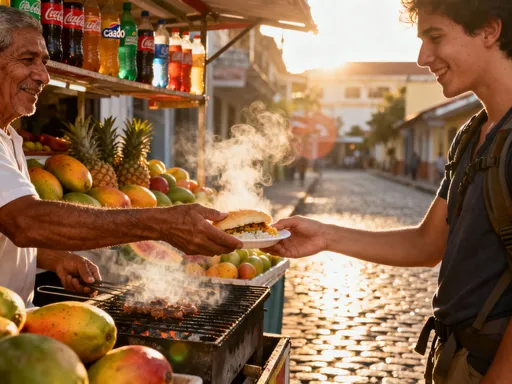
Street stalls, too, offer some of the city’s most memorable bites. Along busy avenues like Avenida Central or near bus terminals, vendors grill chorreadas (sweet corn pancakes) on flat griddles, their golden edges crisping in butter. Others fry empanadas stuffed with cheese or picadillo, sealing the dough with a fork and serving them hot from the oil. These are not snacks to eat on the run; they’re moments to pause, to savor, to connect. A vendor might hand you a napkin with a smile and ask how your day is going. That simple exchange—food and conversation—is part of the meal.
Mercado Central: A Feast for the Senses
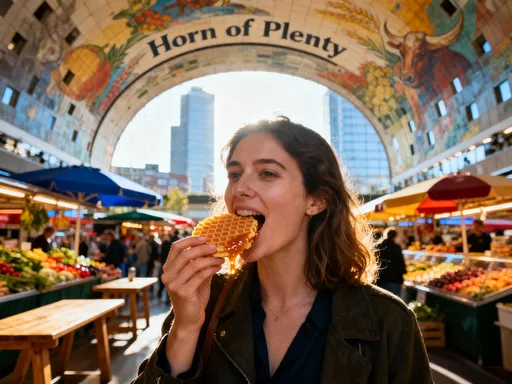
No visit to San José is complete without a walk through Mercado Central, a sprawling indoor market that has been feeding the city since 1880. Located just off Parque Central, this bustling labyrinth of over 200 stalls is a sensory explosion. The air is thick with the scent of cumin, cilantro, and roasting meat. Vendors call out prices in rhythmic Spanish. Baskets overflow with dragon fruit, mamey, and starfruit. Rows of dried chilies hang like festive garlands. It’s chaotic, vibrant, and utterly alive.
Start at the fruit stands, where pyramids of papayas, pineapples, and passion fruit glow in the light. Sample a slice of cas, a lesser-known fruit with juicy, tangy flesh, or try maracuyá (passion fruit) pulp mixed with water and sugar—a refreshing local drink. Move on to the cheese vendors, where wheels of queso fresco and queso palmito—soft, stringy cheese made from palm hearts—are sliced to order. Smell the sharp tang of aged cheeses, the milky sweetness of fresh ones.
Follow the sizzle of grills to the food counters, where cooks assemble plates with practiced hands. One stall specializes in olla de carne, a rich beef stew simmered with corn, yuca, and potatoes. Another serves tamales wrapped in banana leaves—dense, spiced masa filled with vegetables, olives, and sometimes chicken, traditionally eaten during Christmas but available year-round here. Don’t miss the empanadas de picadillo, their golden crusts flaking at the touch, filled with savory spiced ground beef and potatoes.
And then there’s dessert. A small bakery corner offers tres leches cake, its sponge soaked in three kinds of milk—evaporated, condensed, and heavy cream—topped with fluffy whipped cream. A single bite dissolves into sweetness and nostalgia. Nearby, a woman sells arroz con leche, rice pudding scented with cinnamon and clove, served in small plastic cups. It’s the kind of food that reminds you of childhood, of family kitchens, of comfort.
For the best experience, come early—between 8 and 10 a.m.—when the market is lively but not overwhelming. Bring small bills, as change can be hard to come by. Don’t hesitate to ask for samples; many vendors are proud of their products and happy to share. And while tap water isn’t safe to drink, bottled water and natural fruit drinks—called jugos naturales—are widely available and delicious.
Modern Twists: How San José Balances Tradition and Innovation
While San José honors its culinary roots, it is not frozen in time. A new generation of chefs and entrepreneurs is reimagining Costa Rican flavors with creativity and respect. In neighborhoods like Barrio Escalante and Avenida Escazú, modern cafés and restaurants blend local ingredients with global techniques, creating dishes that feel both familiar and exciting.
One café might serve gallo pinto in a deconstructed form—separate components artistically plated with a quail egg on top, accompanied by a drizzle of avocado oil. Another offers a plant-based casado, replacing meat with grilled mushrooms or jackfruit, appealing to vegetarians without sacrificing flavor. You’ll find cold brew coffee infused with local spices like cinnamon and allspice, or craft sodas made with guanábana and ginger.
These innovations don’t replace tradition; they expand it. A young chef might take the concept of tamales and present them as mini-bites at a tasting menu, using heirloom corn and organic fillings. Or a bakery might create a fusion dessert—tres leches with a matcha twist, or arroz con leche with coconut milk and lime zest. The goal isn’t to erase the past but to keep it relevant, to show that Costa Rican cuisine is not static but evolving.
Barrio Escalante, in particular, has become a culinary hotspot. Once a quiet residential area, it now buzzes with energy. Pastel-painted houses have been converted into wine bars, fusion restaurants, and artisanal ice cream shops. On weekends, locals gather for “Ruta de la Cerveza,” a craft beer route that pairs local brews with small plates of reimagined Costa Rican dishes. It’s a celebration of both heritage and innovation—a sign that the city’s food culture is alive and growing.
Yet even in these modern spaces, the spirit of pura vida remains. Service is warm, unhurried. Meals are meant to be lingered over, shared with friends. The emphasis is still on connection, on simplicity, on joy. Whether you’re eating in a century-old market or a sleek new bistro, the message is the same: food is more than fuel. It’s a way of being.
Food as Connection: Sharing Meals, Making Memories
One of the most powerful moments of my trip happened not in a restaurant, but on a bench outside a small soda in the neighborhood of San Pedro. I was eating a simple casado, watching the world go by, when an older woman sitting nearby smiled and pointed to my plate. “¿Te gusta?”, she asked. Do you like it? I nodded enthusiastically, and she chuckled, then reached into her bag and handed me a small, foil-wrapped tamal. “Para probar,” she said. To try.
That small gesture—unexpected, generous, effortless—stayed with me. It wasn’t about the food, though the tamal was delicious. It was about the connection. In that moment, I wasn’t a tourist. I was a guest. I was part of the rhythm of the day, welcomed not because I spent money, but because I showed up with an open heart.
This is the essence of pura vida—not just a phrase on souvenirs, but a way of living. It means simplicity, gratitude, and kindness. It shows up in the way a vendor offers you a sample without being asked, in the way a family invites you to join their meal at a picnic table, in the way a cook patiently explains how to eat a chifrijo—layers of beans, rice, pork rinds, and pico de gallo—without making you feel foolish for not knowing.
Eating like a local opens doors that sightseeing never can. A shared meal breaks down barriers, creates trust, builds memories. It allows you to see the city not as a checklist of attractions, but as a living, breathing community. You begin to notice the rhythms—the early morning rush at the soda, the quiet midday lull, the evening return of families gathering for dinner. You start to recognize faces, to learn a few words of Spanish, to feel, just for a moment, like you belong.
Your Food Adventure Awaits: Practical Tips for Eating Well in San José
Ready to explore San José’s culinary heart? Here are some practical tips to help you eat well, safely, and authentically. First, embrace the local schedule. Costa Ricans eat lunch early—usually between noon and 1:30 p.m. If you arrive at a soda after 2 p.m., the kitchen may already be closed. Breakfast is served from 7 a.m. onward, and dinner typically starts around 6 or 7 p.m.
When it comes to payment, cash is still preferred, especially in markets and smaller sodas. While many places now accept cards, having small bills in colones makes transactions smoother. ATMs are widely available, but notify your bank before traveling to avoid blocked cards.
Hygiene is generally good, but use common sense. Choose busy stalls with high turnover—this means food is fresh and constantly being replaced. If a soda is packed with locals, it’s a safe bet. Avoid raw vegetables or unpeeled fruits from street vendors unless you’re confident in the water quality. Stick to bottled water or sealed drinks, and don’t hesitate to ask for “agua sellada”—sealed water.
Be adventurous, but respectful. Try dishes you’ve never heard of. Ask vendors what’s popular today. Point to something on the counter if you don’t know the name. Most people are delighted when visitors show interest in their food. And if you’re invited into someone’s home for a meal, accept with gratitude—it’s one of the highest honors a traveler can receive.
Finally, come with an open mind and a full appetite. Skip the international chain restaurants and follow the smell of grilled meat, the sound of sizzling plantains, the sight of a line forming outside a tiny storefront. Let the city guide you, one bite at a time. Because in San José, every meal is more than nourishment. It’s an invitation—to slow down, to connect, to taste the true flavor of Costa Rica. Come hungry. Leave transformed.