Wheels, Wind, and Wonder: Chasing Gyeongju’s Soul on Four Wheels
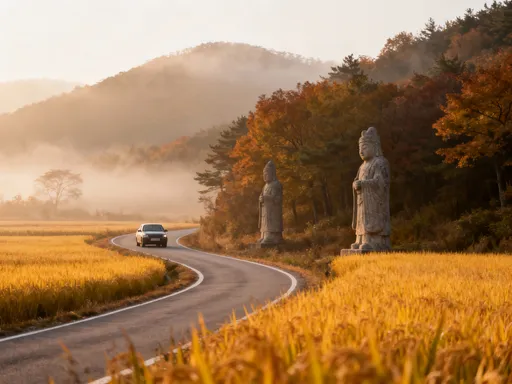
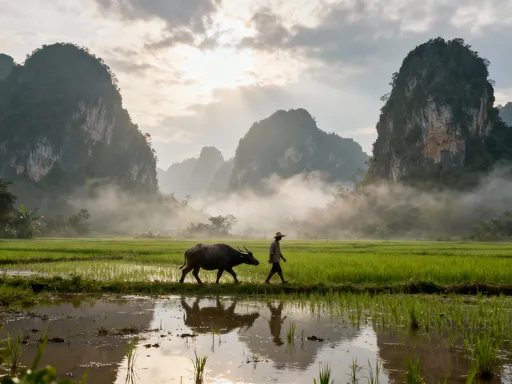
Driving through Gyeongju feels like flipping through the pages of an ancient Korean storybook—only you’re the one turning the corners. With every mile, temple silhouettes rise from morning mist, stone statues keep quiet watch, and golden rice fields shimmer under the sun. This isn’t just sightseeing; it’s experiencing history on your own terms. And there’s no better way to do it than by car. Let me take you through the heart of Korea’s cultural capital, where every themed zone tells a tale, and the open road leads to discovery.
Why Gyeongju? The Timeless Allure of Korea’s Ancient Capital
Gyeongju stands apart as a living museum of Korea’s earliest unified kingdom. For nearly a thousand years, from 57 BCE to 935 CE, it served as the capital of the Silla Dynasty—a period marked by artistic brilliance, spiritual depth, and sophisticated governance. Today, its streets quietly cradle over half of Korea’s national treasures, not in isolated museums, but woven into the natural landscape. Ancient tombs sit beside modern homes. Temples emerge from forested hills. Stone pagodas overlook quiet village lanes. This seamless integration of past and present is what makes Gyeongju unique among historical cities.
Unlike more commercialized heritage destinations, Gyeongju invites contemplation. There’s no rush, no noise, no crowds pressing from every direction. Instead, visitors are met with space—room to walk, to pause, to imagine. And while guided tours and public buses serve the main attractions, they often follow rigid itineraries that limit personal connection. By choosing to explore Gyeongju by car, travelers gain something invaluable: autonomy. The ability to stop at a sunlit mound, linger at a half-hidden shrine, or circle back to a view that caught the eye—these moments of spontaneity deepen the experience far beyond a checklist of sites.
The city’s layout, shaped by centuries of quiet preservation, rewards those who move at their own pace. Roads wind gently through valleys and up forested slopes, connecting cultural zones that feel worlds apart yet are only minutes by car. This spatial freedom allows for thematic immersion—spending a morning with royalty in the tombs, an afternoon with monks in temple halls, and an evening wandering ancestral homes under a setting sun. Gyeongju is not a city to be rushed. It is a place to be felt, and driving offers the most intimate way to listen to its rhythm.
Behind the Wheel: Why Driving Elevates the Gyeongju Experience
Renting a car in South Korea has become increasingly accessible, and in a city like Gyeongju, it transforms the journey from transactional to transformative. While public transportation connects major sites such as Bulguksa Temple and Tumuli Park, many of the region’s most evocative moments lie just beyond the bus routes. A quiet trail leading to a hilltop observatory. A family-run tea house tucked behind a rice field. A lesser-known stele park where moss-covered inscriptions speak of forgotten kings. These are the discoveries made not by schedule, but by curiosity—and a car makes them possible.
One of the greatest advantages of self-driving is flexibility. Families with children, travelers with mobility considerations, or those simply wishing to avoid peak-hour crowds benefit from setting their own hours. Arriving at Bulguksa Temple by 8:00 a.m., for instance, means experiencing its grand courtyards in near silence, with only the sound of wind through pine trees and the distant chime of a temple bell. By contrast, arriving at noon often means navigating tour groups and limited parking. Driving allows for early access, extended stays, and the freedom to return later in the day when light softens and shadows lengthen.
Practical considerations further support the case for car travel. Gyeongju’s cultural sites are spread across a wide area. While compact, the city’s terrain includes hills, valleys, and forested trails that make walking between zones impractical. Public shuttles exist but run infrequently, especially on weekends and holidays. With a car, visitors can carry picnic supplies, folding chairs, cameras, and even small strollers or walking aids without concern. Parking is generally available and well-marked near major attractions, with designated lots at Bulguksa, Tumuli Park, Anapji Pond, and Yangdong Village. Local rental agencies in Gyeongju and nearby cities like Daegu offer well-maintained vehicles with English navigation systems, making orientation straightforward even for first-time drivers in Korea.
Additionally, Korean roads are safe, well-paved, and clearly signed. Speed limits are strictly observed, and drivers are generally courteous. International driving permits are required for non-residents, but obtaining one before travel ensures smooth rental processes. For many visitors, especially those accustomed to driving in Europe or North America, navigating Gyeongju’s roads presents no significant challenge. The real reward lies not in convenience alone, but in the quiet joy of discovery—turning down a narrow lane, spotting a farmer tending a field, or catching a sudden view of a temple roof framed by autumn leaves.
Navigating the Themes: Understanding Gyeongju’s Cultural Zones
Gyeongju’s heritage is organized not by chronology, but by theme—each district offering a distinct window into Silla life. This thematic approach allows travelers to engage more deeply, moving beyond surface-level sightseeing to meaningful understanding. Driving connects these zones seamlessly, enabling a narrative journey through spirituality, power, daily life, and royal leisure.
The Bulguksa-Temple Zone represents the spiritual heart of Silla. Here, Buddhist architecture reached its zenith, blending harmony with nature and symbolic design. Nearby, the Tumuli Park-Ancient Tombs zone reflects the kingdom’s reverence for ancestors. These grass-covered burial mounds, some over 1,500 years old, were once reserved for royalty and elite warriors. Their quiet dignity contrasts with the grandeur of Wolseong-Fortress & Palace Remains, where the foundations of royal power once stood. Though much of the original structure is gone, the site evokes the grandeur of a bygone court. Finally, Yangdong Village-Traditional Hanok Cluster offers insight into Confucian family life during the Joseon period, preserving a way of living that once defined rural Korea.
What makes driving essential is the ability to experience these zones not as isolated stops, but as chapters in a single story. A morning spent among the tombs can lead naturally to an afternoon at Anapji Pond, where the reconstructed pavilions once served as a royal retreat. From there, a short drive to Yangdong Village allows immersion in ancestral rituals and village harmony. Each location builds on the last, creating a layered understanding of Korean values—respect for nature, filial duty, spiritual balance, and quiet resilience.
Navigation apps like Naver Maps or KakaoMap, which are more accurate than international GPS services in rural Korea, make transitions smooth. Routes can be preloaded, and voice guidance helps keep attention on the road. Signage in English is adequate at major intersections, and local tourism centers offer free maps and route suggestions. By treating the drive itself as part of the experience, travelers begin to see Gyeongju not as a collection of sites, but as a continuous cultural landscape—one best appreciated from behind the wheel.
Bulguksa & Seokguram: Where Spirituality Meets Stone
No visit to Gyeongju is complete without experiencing Bulguksa Temple and the Seokguram Grotto, together designated as a UNESCO World Heritage Site. These twin monuments represent the pinnacle of Silla Buddhist art, where faith, craftsmanship, and nature converge in breathtaking harmony. While accessible by public bus, arriving by car allows for a more contemplative approach—especially at dawn, when mist curls around stone lanterns and the first light gilds the temple’s golden roofs.
Bulguksa Temple, originally constructed in the 8th century and meticulously restored in the 20th century, unfolds across a series of elevated courtyards connected by elegant stone bridges. Its layout symbolizes the journey from the earthly realm to enlightenment. The Dabo Pagoda and Seokgatap Pagoda stand as masterpieces of granite masonry, while the main hall houses a serene seated Buddha. The temple’s integration with the surrounding mountains is intentional—every angle, every pathway designed to guide the visitor’s gaze upward, toward the sacred.
From Bulguksa, a short drive and uphill shuttle ride lead to Seokguram Grotto, perched on Tohamsan Mountain. Inside the domed chamber, a monumental stone Buddha sits in meditation, his face illuminated by natural light that filters through an oculus at the ceiling. The craftsmanship is astonishing—the folds of his robe, the calm curve of his lips, the serene expression that seems to shift with the daylight. This is not merely sculpture; it is spiritual presence carved in stone.
Driving to Seokguram offers distinct advantages. The parking lot at Iliji Gate serves as the base for the shuttle bus that ascends the final slope, but arriving early by car means avoiding long queues, especially on weekends and holidays. Visitors can also bring water, light snacks, and comfortable walking shoes—small comforts that enhance the climb. The return journey, winding down the mountain road with views of forested ridges, becomes a moment of quiet reflection. For many, this combination of temple and grotto is the emotional core of their Gyeongju journey—a powerful reminder of how art and faith once shaped a civilization.
Tumuli Park & Daereungwon: Walking Among Kings
Scattered across a peaceful expanse of grass and trees, the ancient burial mounds of Daereungwon form one of Gyeongju’s most iconic landscapes. Over twenty large dome-shaped tombs, believed to house Silla royalty and high-ranking officials, rise gently from the earth like sleeping giants. The largest, known as Cheonmachong (Heavenly Horse Tomb), gives its name to the adjacent museum, where artifacts—including the famous painted saddle cloth—offer rare glimpses into royal life and burial customs.
Unlike the imposing pyramids of other ancient cultures, these mounds are modest in height but profound in presence. Covered in wild grass and ringed by stone markers, they blend into the natural environment, reflecting the Silla belief in harmony between humans and nature. Walking among them, especially in the late afternoon when the sun casts long shadows, evokes a deep sense of timelessness. There is no grandeur here, only dignity—a quiet acknowledgment of those who shaped a kingdom.
Driving to Tumuli Park allows visitors to choose their moment. Many arrive midday, when sunlight flattens the landscape. But those who come in the golden hour—just before sunset—witness something extraordinary. The mounds cast elongated silhouettes across the grass, and the surrounding trees glow in warm hues. It is during these quiet moments that the park feels most alive with memory. Families spread picnic blankets. Children run between mounds. Photographers linger with tripods. The atmosphere is one of peaceful reverence.
The nearby Cheonmachong Museum enhances the experience with well-curated displays of gold crowns, jewelry, weapons, and pottery excavated from the tombs. Audio guides in English provide historical context, explaining the significance of celestial symbols and shamanistic influences in Silla culture. For active travelers, cycling paths loop around the park and extend toward Anapji Pond, offering a scenic way to continue the journey. A car makes it easy to bring bicycles or rent them locally, adding another dimension to exploration. Combining a late afternoon at the tombs with an evening stroll around the illuminated pond creates a full and satisfying day.
Wolseong Fortress & Donggung Palace: Echoes of Moon Palaces
Wolseong Fortress, once the seat of Silla’s royal palace, now exists as a series of stone foundations and earthen walls tracing the outline of a grand complex. Though little remains above ground, the site’s elevated position offers panoramic views of the city and surrounding mountains. Archaeological excavations have revealed tiles, drainage systems, and ceremonial platforms, all hinting at a once-thriving center of power. What makes Wolseong compelling is not its ruins, but its imagination—standing on the same ground where kings once walked, where ceremonies unfolded, and where decisions shaped a millennium.
Adjacent to the fortress lies Anapji Pond, originally constructed as a royal pleasure garden and later restored in the 1970s. This lotus-filled basin, surrounded by reconstructed pavilions and stone bridges, comes alive at night when lanterns illuminate the water. The reflection of light on the surface creates a dreamlike effect, as if the stars have descended to float among the lilies. This is Gyeongju’s most romantic setting—a place where history feels poetic rather than distant.
Driving to Anapji Pond in the evening is highly recommended. Parking is available nearby, and the walk from the lot to the pond is pleasant under soft lighting. Families often gather here, sitting on benches or strolling along the pathways. Some bring small paper boats to float with candles, a gentle tradition that adds to the atmosphere. The site is especially beautiful during the autumn foliage season, when maples around the pond turn fiery red and gold.
By day, Wolseong offers a more archaeological experience. Informational panels in English explain the layout of the palace and the function of each building. Visitors can walk along the restored wooden walkways, imagining the bustle of court life. The site is also home to seasonal cultural performances, including traditional music and dance, which are occasionally held in the open-air theater near the pond. A car allows easy access to these events, especially if they occur in the late afternoon or evening. Afterward, nearby streets offer tea houses and craft shops where travelers can rest and reflect.
Yangdong Village & Beyond: Living Heritage Off the Beaten Path
Nestled in a forested valley northeast of Gyeongju, Yangdong Village is Korea’s largest preserved clan village, dating back to the 15th century. Designated as a UNESCO World Heritage Site, it offers an authentic glimpse into Joseon-era aristocratic life. Over 160 traditional hanok houses—wooden structures with tiled roofs and enclosed courtyards—line narrow lanes that follow the natural contours of the land. Stone walls, wooden gates, and ancestral shrines dot the landscape, creating a scene frozen in time.
Reaching Yangdong by car means avoiding the crowded group tours that arrive by bus. Independent travelers can arrive early, when mist still clings to the rooftops, and explore at a leisurely pace. The village is designed for quiet contemplation—paths wind through groves of pine and zelkova trees, leading to hidden shrines and family memorial halls. Seasonal changes dramatically alter the mood: spring brings cherry blossoms, summer cloaks the hills in green, autumn paints the maples in vivid reds, and winter dusts the rooftops with snow.
Visitors are encouraged to walk respectfully, staying on designated paths and avoiding entry into private homes. Many families still live in the village, maintaining ancestral traditions and tending small gardens. Some hanok have been converted into cultural centers or guesthouses, offering tea ceremonies or calligraphy workshops. These experiences, best enjoyed without time pressure, are more accessible to those who arrive by car and can stay as long as they wish.
Beyond the village, rural roads offer scenic detours through rice paddies and forest trails. Small roadside stalls sell local specialties—persimmon cakes, dried herbs, handmade pottery. These quiet moments of connection with local life are among the most memorable parts of a Gyeongju journey. A car enables spontaneous stops, chance encounters, and the freedom to follow one’s curiosity. For families, it also means being able to rest, rehydrate, and return at a comfortable pace.
Closing the Loop: Why the Open Road Leads to Deeper Discovery
Driving through Gyeongju is more than a method of transportation—it is a philosophy of travel. It represents a choice to move slowly, to observe closely, and to engage deeply. The car becomes not just a vessel, but a companion on a journey through time, allowing travelers to set their own rhythm and respond to the landscape with presence and intention.
In a world where tourism often feels rushed and standardized, Gyeongju offers an alternative. Here, history is not behind glass, but all around. It is in the curve of a stone bridge, the silence of a forested tomb, the reflection of a lantern on still water. By driving, visitors gain access not only to sites, but to moments—the sudden view of a temple through autumn leaves, the quiet conversation with a local artisan, the peace of a sunset over ancient mounds.
This kind of travel fosters connection. It allows mothers, daughters, sisters, and friends to share stories as they drive from one place to another. It creates space for reflection, for teaching, for passing down appreciation of culture and beauty. For the 30- to 55-year-old woman—often balancing family, work, and personal dreams—this journey offers renewal. It is not about escape, but about reconnection—with history, with nature, with oneself.
So let the road guide you. Let curiosity lead the way. In Gyeongju, every turn reveals a new chapter, every stop holds a quiet wonder. And in the end, it is not the destinations that remain, but the feeling—the wind through the window, the sun on your face, the sense of being exactly where you are meant to be.